
נ.ב. דף זה אין עדיין “המופשט אנגלית” גִרְסָה. תרגומים אוטומטיים מבוססים על הנוסח האנגלי המקורי. הם עשויים לכלול טעויות משמעותיות.
ה “סיכוני שגיאה” הדירוג של התרגום: ????
מבוא
Unlike Matthew, מארק ולוק, which seek to describe the whole of Jesus’ מִשׂרָד, John’s gospel focuses on a handful of miracles and the conversations arising from them.
One of the remarkable things about his account is the extraordinary detail with which he recounts these conversations. It is not that this was an impossible feat: in those times people relied far more heavily on memory than nowadays. וזה, even today there are individuals who exhibit Hyperthymesia, אוֹ “Highly Superior Autobiographical Memory,” as it is known. ג'ון, למרות זאת, puts this ability firmly down to a specific promise of Jesus:
I have said these things to you, while still living with you. But the Counselor, רוח הקודש, whom the Father will send in my name, he will teach you all things, and will remind you of all that I said to you. (ג'ון 14:25-6)
But there is one major puzzle: John devotes 5 chapters to the conversation Jesus had with his disciples after the Last Supper, and his subsequent prayer for them. But there is one thing he doesn’t mention…
Where is the Lord’s Supper?
John begins his account with the washing of the disciples feet, after supper has ended (יוחנן 13:2). The other 3 gospels all say that, during this supper, Jesus took bread and wine and shared it with the disciples, commanding them to, ‘Do this in remembrance of me.’ This became a regular custom in the early church (see Lk 24:35; מעשי השליחים 2:42, 1 קור 10:16, 11:20; מעשי השליחים 20:7).
As a leader of the early church, it is inconceivable that John was unaware of this practice, or the significance of Jesus’ words at the last supper. So why doesn’t he mention it? I believe the key lies in this…
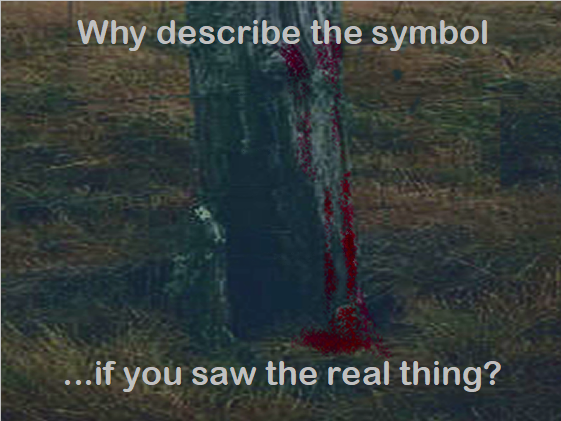
John’s view of the cross
John had a unique perspective on the crucifixion.
Then all the disciples left him, and fled. (mt 26:56)
Simon Peter followed Jesus, as did another disciple. Now that disciple was known to the high priest, and entered in with Jesus into the court of the high priest; but Peter was standing at the door outside. So the other disciple, who was known to the high priest, went out and spoke to her who kept the door, and brought in Peter. (ג'ון 18:15-16)
All his acquaintances, and the women who followed with him from Galilee, עמד מרחוק, watching these things. (לוק 23:49)
Therefore when Jesus saw his mother, and the disciple whom he loved standing there, he said to his mother, “אִשָׁה, behold your son!” (ג'ון 19:26)
John was the only disciple to stand at the cross as Jesus died.
When Jesus was betrayed, all the disciples initially fled. But John’s family appear to have had connections with the high priest’s household. (It is likely that his father was a wealthy fish merchant – see Mk 1:19-20). So he and Peter managed to get into the courtyard of the high priest’s house. They probably spent the rest of the night in Jerusalem.
In the morning John was able to reach the cross itself. The rest of the disciples and women were watching from a distance (לוקס 23:49), probably through fear of being arrested. We don’t know if Peter was with them. But later on some of the women, including Mary, ventured right up to the cross (women were mostly ignored by the authorities) and met with John.
The breaking of bread was a symbol for us to remember Jesus’ death by: but for John, the memory of the cross itself overrode any other.
What must it have been like for him?
John’s vision was quite unlike our own
When we think of the cross, we have a post-Easter perspective:
“At the cross, at the cross, where I first saw the light,
and the burden of my heart rolled away…”
But for John, this was the ultimate disaster – the worst moment of his life!
At the time it made no sense at all.
הבשורות אומרות לנו את זה באופן עקבי, although Jesus had predicted both his death and resurrection, the disciples completely failed to understand. They regarded Jesus as the Messiah (המשיח). But their concept was of a victorious deliverer who would free his country from foreign oppression.
אמר להם, “But who do you say that I am?” Simon Peter answered, “You are the Christ, the Son of the living God.” (mt 16:15-16)
מהזמן ההוא, Jesus began to show his disciples that he must go to Jerusalem and suffer many things from the elders, chief priests, and scribes, and be killed, and the third day be raised up. Peter took him aside, and began to rebuke him, אומר, “Far be it from you, אָדוֹן! This will never be done to you.” But he turned, and said to Peter, “Get behind me, שָׂטָן! You are a stumbling block to me, for you are not setting your mind on the things of God, but on the things of men.” Then Jesus said to his disciples, “If anyone desires to come after me, let him deny himself, and take up his cross, and follow me. (mt 16:21-24)
Standing there, John probably recalled some of Jesus’ recent sayings: but still he did not understand…
A little while, and you will not see me. Again a little while, and you will see me.” Some of his disciples therefore said to one another, “What is this that he says to us, ‘A little while, and you won’t see me, and again a little while, and you will see me;’ ו, ‘Because I go to the Father?’ ” They said therefore, “What is this that he says, ‘A little while?’ We don’t know what he is saying.” (יוחנן 16:17-18)
I came out from the Father, and have come into the world. שוב, I leave the world, and go to the Father.” אמרו לו תלמידיו, “לְהַבִּיט, now you speak plainly, and speak no figures of speech. Now we know that you know all things, and don’t need for anyone to question you. By this we believe that you came forth from God.” ישוע ענה להם, “Do you now believe? לְהַבִּיט, the time is coming, כן, and has now come, that you will be scattered, everyone to his own place, and you will leave me alone. (יוחנן 16:28-32)
התלמידים לא ציפו לתחייה.
The general apprehension in Jesus’ יְוֹם (even more than in ours!) היה שאנשים מתים לא חוזרים לחיים. No-one had ever been raised except through the agency of a mighty prophet. Jesus had raised 3 אֲנָשִׁים: but if he died, how could a dead man raise himself?
לחשיבה יהודית, a dead Messiah was a false Messiah. (מכאן ההתפכחות הניכרת של שני התלמידים בדרך אמאוס, למרות שהם כבר שמעו את סיפורן של הנשים (לוקס 24:17-24).)
Too depressing to mention
Most of what John felt and saw was too depressing to mention.
The Agony
He doesn’t talk about the nails or the agony on Jesus’ face. But this probably wasn’t the first crucifixion he’d seen: and he had no idea that Jesus was actually suffering all of this for him.
"אַבָּא, forgive them”
Do you suppose that John felt like forgiving them?
“This day you’ll be with me in Paradise”
Nice words. But he’d spent years listening to nice words. And now it had come to this…
"אלוהים שלי, אלוהים, למה זנחת אותי?”
The words might have reminded him of the crucifixion prophecy of Psalm 22 and resonated with the incident regarding the robe. But the despair and agony in Jesus’ voice would have been the ultimate downer. “Jesus, I’d hoped you knew what you were doing: but now it seems you don’t.”
Tiny glimmers of light
In the midst of all this darkness, there were some things that caught his attention – glimmers of light in his darkness; though he probably had no idea what they meant…
That robe
Did John see the soldiers tearing up Jesus’ clothes and notice how they spared the robe and cast lots for it? אם כך, it must have struck him as unusual, and maybe rung a faint chord of memory at the time? What could it mean?
They divide my garments among them. They cast lots for my clothing. (Psalm 22:18)
He saw Jesus’ care for his mother
Therefore when Jesus saw his mother, and the disciple whom he loved standing there, he said to his mother, “אִשָׁה, behold your son!” Then he said to the disciple, “לְהַבִּיט, your mother!” From that hour, the disciple took her to his own home. (ג'ון 19:26-27)
In the midst of all that physical agony, and struggling even to breathe, Jesus was concerned for his mother’s feelings and needs. John looked at her and saw the unutterable pain in her eyes. ובכל זאת, there was a resignation, as if she had always known (לוקס 2:34-35). יֵשׁוּעַ’ care and her heartbroken acceptance of her situation – he could never refuse or forget that lesson.
He saw Jesus fulfilling prophecy.
אחרי זה, יֵשׁוּעַ, seeing that all things were now finished, that the Scripture might be fulfilled, אמר, “I am thirsty.” Now a vessel full of vinegar was set there; so they put a sponge full of the vinegar on hyssop, and held it at his mouth. (יוחנן 19:28-29)
This must have puzzled John. The previous night he had heard Jesus vow not to drink wine again, ‘until I drink it new, with you, in the kingdom of God.’ Earlier, the soldiers had been taunting him with this sour wine vinegar: so why was he now telling them he was thirsty? Did John then remember the words of the Psalmist, “in My thirst they gave Me vinegar to drink.” (נ.ב 69:21)? I don’t know: but the impression stuck with him. Right to the very end, Jesus was determined to do every last thing that the Father wanted.
He heard Jesus’ declaration of accomplishment.
When he had received the drink, ישו אמר, “It is finished.” עם זה, he bowed his head and gave up his spirit. (יוחנן 19:30)
Jesus would probably have spoken in Hebrew or Aramaic; but the Greek word used to translate Jesus’ final utterance is ‘tetelestai,’ which describes a creative work fully completed or a debt paid in full. This was not a cry of defeat: but a proclamation of victory; though at the time, John had no idea how this could be.
He saw prophecy fulfilled again
Therefore the Jews, because it was the Preparation Day, so that the bodies wouldn’t remain on the cross on the Sabbath (for that Sabbath was a special one), asked of Pilate that their legs might be broken, and that they might be taken away. Therefore the soldiers came, and broke the legs of the first, and of the other who was crucified with him; but when they came to Jesus, and saw that he was already dead, they didn’t break his legs. However one of the soldiers pierced his side with a spear, and immediately blood and water came out. He who has seen has testified, and his testimony is true. He knows that he tells the truth, that you may believe. For these things happened, that the Scripture might be fulfilled, “A bone of him will not be broken.” Again another Scripture says, “They will look on him whom they pierced.” (יוחנן 19:31-37)
Why had the soldier paused when it came to breaking Jesus’ legs and elected to use his spear instead? Did John remember those prophecies at the time? אם כך, how come they were continuing to be fulfilled even after Jesus’ מוות?
באופן נבואי, avoiding the breaking of Jesus’ bones reflects both Psalm 34:20 and the command in Ex 12:46 and Num 9:10 that no bones of the Passover lamb must ever be broken. But why did Jesus have to be pierced with a spear, not just the nails? It is because the word translated ‘pierced’ in Zechariah 12:10 is very specific: it is only used in the Bible to describe a sword or spear thrust delivered with lethal intent.
On the natural level, this strange observation of blood and water flooding from Jesus’ side provides medical authentication of John’s account and also proves that he was dead. Following his flogging, it is likely that Jesus was suffering from hypovolemic shock, caused by loss of body fluids. This results in a sustained rapid heartbeat that also causes fluid to gather in the sack around the heart and around the lungs, known as pericardial and pleural effusion. The slow asphyxiation caused by crucifixion also contributes to this. To release both blood and water in this way, it must have been a lethal blow, even if Jesus had not been already dead. And the fact that they appeared as distinct streams indicates that the blood was already coagulating.
Symbolically, what might it have meant to him? Outpoured blood, quite naturally, makes us think of death: but water we associate with life; and Jesus had foretold the coming gift of ‘living water.’ So here again was a glimmer of hope, if John could but see it.
אבל, בזמן, it was an utterly perplexing mess
But how did John see it afterwards?
Although John doesn’t describe Jesus’ remarks about the bread and wine at the Last Supper, he actually devotes more space to this subject than any other gospel. He does so by recalling Jesus’ earlier discourses in which he had spoken on this subject. בזמן, John hadn’t understood: but now he did.
After feeding the 5,000 (ג'ון 6:25-71).
The people wanted food: Jesus wanted faith
ישוע ענה להם, “בהחלט אני אומר לך, אתה מחפש אותי, לא בגלל שראית שלטים, אלא מפני שאכלת מן הלחם, והתמלאו. אל תעבדו למען האוכל שמתאבד, אלא לאוכל שנשאר לחיי נצח, אשר יתן לך בן האדם. כי אלוהים האב חתם אותו.”
אמרו לו לפיכך, “מה עלינו לעשות, כדי שנעבוד את מעשי ה'?” ישוע ענה להם, “זוהי עבודת ה', שאתה מאמין במי שהוא שלח.”
אמרו לו לפיכך, “אז מה אתה עושה בשביל סימן, שנוכל לראות, ולהאמין לך? איזו עבודה אתה עושה? אבותינו אכלו את המן במדבר. כמו שכתוב, 'הוא נתן להם לחם מגן עדן לאכול.’ ” לכן אמר להם ישוע, “קרוב לוודאי, אני אומר לך, זה לא משה נתן לך את הלחם מהשמים, אבל אבי נותן לך את הלחם האמיתי מהשמים. כי לחם האלוהים הוא היורד מן השמים, ונותן חיים לעולם.”
אמרו לו לפיכך, “אָדוֹן, תמיד תן לנו את הלחם הזה.” (Joh 6:26-34)
They want physical food: He offers spiritual food – Himself
ישו אמר להם, “אני לחם החיים. מי שיבוא אלי לא יהיה רעב, ומי שמאמין בי לעולם לא יהיה צמא. (Joh 6:35)
Notice: coming to Jesus will satisfy your hunger: putting your faith in Him will satisfy your thirst.
“קרוב לוודאי, אני אומר לך, he who believes in me has eternal life. אני לחם החיים. אבותיכם אכלו את המן במדבר, והם מתו. זה הלחם היורד מהשמים, שכל אחד יאכל ממנו ולא ימות. אני הלחם החי אשר ירד מן השמים. אם מישהו אוכל מהלחם הזה, הוא יחיה לנצח. כן, הלחם אשר אתן לחיי העולם הוא בשרי.”
היהודים התנצחו אפוא זה בזה, אומר, “איך האיש הזה יכול לתת לנו את בשרו לאכול?”
לכן אמר להם ישוע, “בהחלט אני אומר לך, אלא אם כן תאכל את בשרו של בן האדם ושתה את דמו, אין לכם חיים בעצמכם. מי שאוכל את בשרי ושותה את דמי יש לו חיי נצח, ואקים אותו ביום האחרון. כי בשרי הוא אכן אוכל, ודמי אכן משקה. מי שאוכל את בשרי ושותה את דמי חי בתוכי, ואני בו. כמו ששלח אותי האב החי, ואני חי בגלל האב; אז מי שניזון ממני, הוא גם יחיה בגללי. זהו הלחם אשר ירד מן השמים-לא כפי שאכלו אבותינו את המן, ומת. מי שיאכל את הלחם הזה יחיה לנצח.” (Joh 6:47-58)
For further discussion of this passage, see the posting, ‘הלחם היומי שלנו.’
How did Jesus live because of the father?
In the meanwhile, the disciples urged him, אומר, “רַב, eat.” אבל הוא אמר להם, “I have food to eat that you don’t know about.”
The disciples therefore said one to another, “Has anyone brought him something to eat?” ישו אמר להם, “My food is to do the will of him who sent me, and to accomplish his work.” (יוחנן 4:31-34)
The serpent in the wilderness
ישוע ענה, “בהחלט אני אומר לך, אלא אם כן נולד ממים ורוח, הוא לא יכול להיכנס למלכות אלוהים! מה שנולד מהבשר הוא בשר. That which is born of the Spirit is spirit.” (Joh 3:5-6)
“אף אחד לא עלה לגן עדן, אלא מי שירד מן השמים, בן האדם, מי בגן עדן. כמו שמשה הרים את הנחש במדבר, גם כן צריך להרים את בן האדם, שכל המאמין בו לא יאבד, but have eternal life.” (Joh 3:13-15)
“He who comes from above is above all. He who is from the Earth belongs to the Earth, and speaks of the Earth. He who comes from heaven is above all. What he has seen and heard, of that he testifies; and no one receives his witness. He who has received his witness has set his seal to this, that God is true.” (Joh 3:31-33)
יְהוּדָה
When Jesus had said this, he was troubled in spirit, and testified, “Most certainly I tell you that one of you will betray me.”
The disciples looked at one another, perplexed about whom he spoke. One of his disciples, whom Jesus loved, was at the table, leaning against Jesus’ breast. Simon Peter therefore beckoned to him, ואמר לו, “Tell us who it is of whom he speaks.” He, leaning back, as he was, on Jesus’ breast, שאל אותו, “אָדוֹן, who is it?”
Jesus therefore answered, “It is he to whom I will give this piece of bread when I have dipped it.” So when he had dipped the piece of bread, he gave it to Judas, the son of Simon Iscariot. אחרי חתיכת הלחם, ואז השטן נכנס לתוכו. ואז אמר לו ישוע, “מה אתה עושה, לעשות מהר.” Now no man at the table knew why he said this to him. For some thought, because Judas had the money box, that Jesus said to him, “Buy what things we need for the feast,” or that he should give something to the poor. לָכֵן, having received that morsel, he went out immediately. It was night. (Joh 13:21-30)
Will You Go or Follow?
Therefore many of his disciples, when they heard this, אמר, “This is a hard saying! Who can listen to it?” But Jesus knowing in himself that his disciples murmured at this, אמר להם, “Does this cause you to stumble? Then what if you would see the Son of Man ascending to where he was before? It is the spirit who gives life. The flesh profits nothing. The words that I speak to you are spirit, and are life.” (Joh 6:60-63)
… At this, many of his disciples went back, and walked no more with him. Jesus said therefore to the twelve, “You don’t also want to go away, do you?” Simon Peter answered him, “אָדוֹן, to whom would we go? You have the words of eternal life. We have come to believe and know that you are the Christ, the Son of the living God.” (Joh 6:66-69)
Did they understand?
לא.
Were they prepared to follow?
כן
יצירת דף באמצעות קווין המלך
נ.ב. כדי למנוע ספאם או פוגעניים בכוונה פרסומים, הערות מתווכות. אם אני איטי באישור או להגיב לתגובה שלך, בבקשה, סלח לי. אני אנסה לעקוף את זה ברגע שאני יכול ולא מנימוקים סבירים פרסום.