
N.B. Paj sa a ki poko gen yon “senplifye angle” vèsyon. Otomatik tradiksyon ki baze sou tèks orijinal la angle. Yo ka gen ladan erè siyifikatif.
La “erè Risk” Rating nan tradiksyon an se: ????
Entwodiksyon
Unlike Matthew, Mak ak Lik, which seek to describe the whole of Jesus’ ministè, John’s gospel focuses on a handful of miracles and the conversations arising from them.
One of the remarkable things about his account is the extraordinary detail with which he recounts these conversations. It is not that this was an impossible feat: in those times people relied far more heavily on memory than nowadays. Epi, even today there are individuals who exhibit Hyperthymesia, oswa “Highly Superior Autobiographical Memory,” as it is known. Jan, sepandan, puts this ability firmly down to a specific promise of Jesus:
I have said these things to you, while still living with you. But the Counselor, Lespri Sen an, whom the Father will send in my name, he will teach you all things, and will remind you of all that I said to you. (Jan 14:25-6)
But there is one major puzzle: John devotes 5 chapters to the conversation Jesus had with his disciples after the Last Supper, and his subsequent prayer for them. But there is one thing he doesn’t mention…
Where is the Lord’s Supper?
John begins his account with the washing of the disciples feet, after supper has ended (JN 13:2). The other 3 gospels all say that, during this supper, Jesus took bread and wine and shared it with the disciples, commanding them to, ‘Do this in remembrance of me.’ This became a regular custom in the early church (see Lk 24:35; Zak 2:42, 1 Kor 10:16, 11:20; Zak 20:7).
As a leader of the early church, it is inconceivable that John was unaware of this practice, or the significance of Jesus’ words at the last supper. So why doesn’t he mention it? I believe the key lies in this…
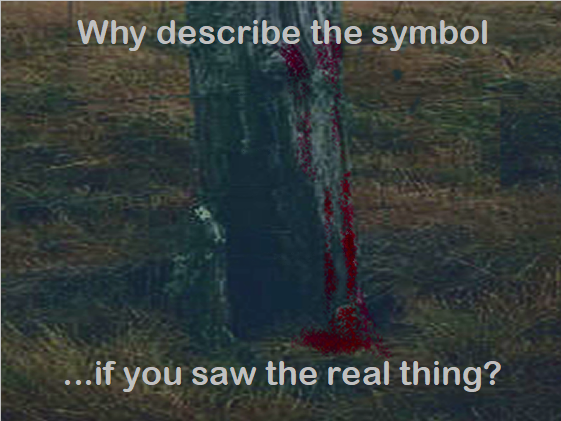
John’s view of the cross
John had a unique perspective on the crucifixion.
Then all the disciples left him, and fled. (MT 26:56)
Simon Peter followed Jesus, as did another disciple. Now that disciple was known to the high priest, and entered in with Jesus into the court of the high priest; but Peter was standing at the door outside. So the other disciple, who was known to the high priest, went out and spoke to her who kept the door, and brought in Peter. (Jan 18:15-16)
All his acquaintances, and the women who followed with him from Galilee, te kanpe nan yon distans, watching these things. (Lik 23:49)
Therefore when Jesus saw his mother, and the disciple whom he loved standing there, he said to his mother, “Fanm, behold your son!” (Jan 19:26)
John was the only disciple to stand at the cross as Jesus died.
When Jesus was betrayed, all the disciples initially fled. But John’s family appear to have had connections with the high priest’s household. (It is likely that his father was a wealthy fish merchant – see Mk 1:19-20). So he and Peter managed to get into the courtyard of the high priest’s house. They probably spent the rest of the night in Jerusalem.
In the morning John was able to reach the cross itself. The rest of the disciples and women were watching from a distance (Lk 23:49), probably through fear of being arrested. We don’t know if Peter was with them. But later on some of the women, including Mary, ventured right up to the cross (women were mostly ignored by the authorities) and met with John.
The breaking of bread was a symbol for us to remember Jesus’ death by: but for John, the memory of the cross itself overrode any other.
What must it have been like for him?
John’s vision was quite unlike our own
When we think of the cross, we have a post-Easter perspective:
“At the cross, at the cross, where I first saw the light,
and the burden of my heart rolled away…”
But for John, this was the ultimate disaster – the worst moment of his life!
At the time it made no sense at all.
Levanjil yo toujou di nou sa, although Jesus had predicted both his death and resurrection, the disciples completely failed to understand. They regarded Jesus as the Messiah (Kris la). But their concept was of a victorious deliverer who would free his country from foreign oppression.
Li di yo, “But who do you say that I am?” Simon Peter answered, “You are the Christ, the Son of the living God.” (MT 16:15-16)
Depi lè sa a, Jesus began to show his disciples that he must go to Jerusalem and suffer many things from the elders, chief priests, ak dirèktè lalwa, and be killed, and the third day be raised up. Peter took him aside, and began to rebuke him, di, “Far be it from you, Seyè! This will never be done to you.” But he turned, and said to Peter, “Jwenn dèyè m ', Satan! Ou se yon blokaj pou mwen, for you are not setting your mind on the things of God, but on the things of men.” Then Jesus said to his disciples, “If anyone desires to come after me, let him deny himself, and take up his cross, and follow me. (MT 16:21-24)
Standing there, John probably recalled some of Jesus’ recent sayings: but still he did not understand…
A little while, and you will not see me. Again a little while, and you will see me.” Some of his disciples therefore said to one another, “What is this that he says to us, ‘A little while, and you won’t see me, and again a little while, and you will see me;’ ak, ‘Because I go to the Father?’ ” They said therefore, “What is this that he says, ‘A little while?’ We don’t know what he is saying.” (JN 16:17-18)
I came out from the Father, and have come into the world. Ankò, I leave the world, and go to the Father.” Disip li yo di li, “Gade, now you speak plainly, and speak no figures of speech. Now we know that you know all things, and don’t need for anyone to question you. By this we believe that you came forth from God.” Jezi reponn yo, “Do you now believe? Gade, the time is coming, wi, and has now come, that you will be scattered, everyone to his own place, and you will leave me alone. (JN 16:28-32)
Disip yo pa t ap tann yon rezirèksyon.
The general apprehension in Jesus’ jou (even more than in ours!) te ke moun ki mouri pa tounen nan lavi. No-one had ever been raised except through the agency of a mighty prophet. Jesus had raised 3 moun: but if he died, how could a dead man raise himself?
Pou panse jwif yo, a dead Messiah was a false Messiah. (Pakonsekan evidan desepsyon de disip yo sou wout Emmaus la, menm si yo te deja tande istwa fanm yo (Lk 24:17-24).)
Too depressing to mention
Most of what John felt and saw was too depressing to mention.
The Agony
He doesn’t talk about the nails or the agony on Jesus’ face. But this probably wasn’t the first crucifixion he’d seen: and he had no idea that Jesus was actually suffering all of this for him.
“Papa, forgive them”
Do you suppose that John felt like forgiving them?
“This day you’ll be with me in Paradise”
Nice words. But he’d spent years listening to nice words. And now it had come to this…
“Bondye mwen, Bondye mwen, poukisa ou lage mwen?"
The words might have reminded him of the crucifixion prophecy of Psalm 22 and resonated with the incident regarding the robe. But the despair and agony in Jesus’ voice would have been the ultimate downer. “Jesus, I’d hoped you knew what you were doing: but now it seems you don’t.”
Tiny glimmers of light
In the midst of all this darkness, there were some things that caught his attention – glimmers of light in his darkness; though he probably had no idea what they meant…
That robe
Did John see the soldiers tearing up Jesus’ clothes and notice how they spared the robe and cast lots for it? Si se konsa, it must have struck him as unusual, and maybe rung a faint chord of memory at the time? What could it mean?
They divide my garments among them. They cast lots for my clothing. (Psalm 22:18)
He saw Jesus’ care for his mother
Therefore when Jesus saw his mother, and the disciple whom he loved standing there, he said to his mother, “Fanm, behold your son!” Then he said to the disciple, “Gade, your mother!” From that hour, the disciple took her to his own home. (Jan 19:26-27)
In the midst of all that physical agony, and struggling even to breathe, Jesus was concerned for his mother’s feelings and needs. John looked at her and saw the unutterable pain in her eyes. E ankò, there was a resignation, as if she had always known (Lk 2:34-35). Jezi’ care and her heartbroken acceptance of her situation – he could never refuse or forget that lesson.
He saw Jesus fulfilling prophecy.
Apre sa, Jezi, seeing that all things were now finished, that the Scripture might be fulfilled, te di, “I am thirsty.” Now a vessel full of vinegar was set there; so they put a sponge full of the vinegar on hyssop, and held it at his mouth. (JN 19:28-29)
This must have puzzled John. The previous night he had heard Jesus vow not to drink wine again, ‘until I drink it new, with you, in the kingdom of God.’ Earlier, the soldiers had been taunting him with this sour wine vinegar: so why was he now telling them he was thirsty? Did John then remember the words of the Psalmist, “in My thirst they gave Me vinegar to drink.” (Ps 69:21)? Mwen pa konnen: but the impression stuck with him. Right to the very end, Jesus was determined to do every last thing that the Father wanted.
He heard Jesus’ declaration of accomplishment.
When he had received the drink, Jezi di, “It is finished.” Avek sa, he bowed his head and gave up his spirit. (JN 19:30)
Jesus would probably have spoken in Hebrew or Aramaic; but the Greek word used to translate Jesus’ final utterance is ‘tetelestai,’ which describes a creative work fully completed or a debt paid in full. This was not a cry of defeat: but a proclamation of victory; though at the time, John had no idea how this could be.
He saw prophecy fulfilled again
Therefore the Jews, because it was the Preparation Day, so that the bodies wouldn’t remain on the cross on the Sabbath (for that Sabbath was a special one), asked of Pilate that their legs might be broken, and that they might be taken away. Therefore the soldiers came, and broke the legs of the first, and of the other who was crucified with him; but when they came to Jesus, and saw that he was already dead, they didn’t break his legs. However one of the soldiers pierced his side with a spear, and immediately blood and water came out. He who has seen has testified, and his testimony is true. He knows that he tells the truth, that you may believe. For these things happened, that the Scripture might be fulfilled, “A bone of him will not be broken.” Again another Scripture says, “They will look on him whom they pierced.” (JN 19:31-37)
Why had the soldier paused when it came to breaking Jesus’ legs and elected to use his spear instead? Did John remember those prophecies at the time? Si se konsa, how come they were continuing to be fulfilled even after Jesus’ lanmò?
Pwofetikman, avoiding the breaking of Jesus’ bones reflects both Psalm 34:20 and the command in Ex 12:46 and Num 9:10 that no bones of the Passover lamb must ever be broken. But why did Jesus have to be pierced with a spear, not just the nails? It is because the word translated ‘pierced’ in Zechariah 12:10 is very specific: it is only used in the Bible to describe a sword or spear thrust delivered with lethal intent.
On the natural level, this strange observation of blood and water flooding from Jesus’ side provides medical authentication of John’s account and also proves that he was dead. Following his flogging, it is likely that Jesus was suffering from hypovolemic shock, caused by loss of body fluids. This results in a sustained rapid heartbeat that also causes fluid to gather in the sack around the heart and around the lungs, known as pericardial and pleural effusion. The slow asphyxiation caused by crucifixion also contributes to this. To release both blood and water in this way, it must have been a lethal blow, even if Jesus had not been already dead. And the fact that they appeared as distinct streams indicates that the blood was already coagulating.
Symbolically, what might it have meant to him? Outpoured blood, quite naturally, makes us think of death: but water we associate with life; and Jesus had foretold the coming gift of ‘living water.’ So here again was a glimmer of hope, if John could but see it.
Men, nan moman an, it was an utterly perplexing mess
But how did John see it afterwards?
Although John doesn’t describe Jesus’ remarks about the bread and wine at the Last Supper, he actually devotes more space to this subject than any other gospel. He does so by recalling Jesus’ earlier discourses in which he had spoken on this subject. Nan moman an, John hadn’t understood: but now he did.
After feeding the 5,000 (Jan 6:25-71).
The people wanted food: Jesus wanted faith
Jezi reponn yo, “Sètènman mwen di ou, ou chache m, pa paske ou te wè siy, men paske nou te manje nan pen yo, epi yo te ranpli. Pa travay pou manje ki peri, men pou manje ki rete pou lavi etènèl la, Moun Bondye voye nan lachè a pral ba ou. Paske Bondye Papa a sele l.”
Yo di l' konsa, “Kisa nou dwe fè, pou nou ka fè travay Bondye yo?” Jezi reponn yo, “Sa a se travay Bondye, pou nou kwè nan moun li voye a.”
Yo di l' konsa, “Lè sa a, kisa ou fè pou yon siy, pou nou ka wè, epi kwè ou? Ki travay ou fè? Zansèt nou yo te manje laman nan dezè a. Jan sa ekri, ‘Li ba yo pen ki soti nan syèl la pou yo manje.’ ” Jezi di yo, “Pi sètènman, mwen di ou, se pa Moyiz ki te ban nou pen ki soti nan syèl la, Men, Papa m' ban nou vrè pen ki soti nan syèl la. Paske, pen Bondye a se sa ki desann sot nan syèl la, epi li bay mond lan lavi.”
Yo di l' konsa, “Seyè, toujou ban nou pen sa a.” (Joh 6:26-34)
They want physical food: He offers spiritual food – Himself
Jezi di yo, “Mwen se pen lavi a. Moun ki vin jwenn mwen p'ap grangou, e moun ki mete konfyans yo nan mwen p'ap janm swaf dlo. (Joh 6:35)
Avi: coming to Jesus will satisfy your hunger: putting your faith in Him will satisfy your thirst.
“Pi sètènman, mwen di ou, he who believes in me has eternal life. Mwen se pen lavi a. Zansèt nou yo te manje laman nan dezè a, epi yo te mouri. Sa a se pen ki desann sot nan syèl la, Konsa, nenpòt moun ka manje ladan l' epi yo pa mouri. Mwen se pen vivan ki desann sot nan syèl la. Si yon moun manje nan pen sa a, l'ap viv pou tout tan. Wi, Pen m ap bay pou lavi sou latè a se kò mwen.”
Se poutèt sa, jwif yo te goumen youn ak lòt, di, “Ki jan nonm sa a ka ban nou vyann li pou nou manje??”
Jezi di yo, “Sètènman mwen di ou, sof si nou pa manje vyann Moun Bondye voye nan lachè a, epi nou pa bwè san li, ou pa gen lavi nan tèt ou. Moun ki manje vyann mwen epi ki bwè san mwen gen lavi etènèl, M'ap fè l' leve soti vivan nan lanmò nan dènye jou a. Paske, kò mwen an se manje vre, epi san mwen se bwè tout bon. Moun ki manje vyann mwen epi ki bwè san mwen ap viv nan mwen, e mwen nan li. Jan Papa vivan an voye m ', e m ap viv grasa Papa a; Se konsa, moun ki manje m ', l'ap viv tou grasa mwen. Sa a se pen ki te desann sot nan syèl la, pa tankou zansèt nou yo te manje laman an, epi li mouri. Moun ki manje pen sa a ap viv pou tout tan.” (Joh 6:47-58)
For further discussion of this passage, see the posting, ‘Pen chak jou nou yo.’
How did Jesus live because of the father?
In the meanwhile, the disciples urged him, di, “Rabi, eat.” Men, li di yo, “I have food to eat that you don’t know about.”
The disciples therefore said one to another, “Has anyone brought him something to eat?” Jezi di yo, “My food is to do the will of him who sent me, and to accomplish his work.” (JN 4:31-34)
The serpent in the wilderness
Jezi reponn, “Sètènman mwen di ou, sof si yon moun fèt nan dlo ak lespri, li pa ka antre nan Wayòm Bondye a! Sa ki fèt nan kò a se lachè. That which is born of the Spirit is spirit.” (Joh 3:5-6)
“Pa gen moun ki monte nan syèl la, men li menm ki te desann sot nan syèl la, Pitit lòm nan, ki moun ki nan syèl la. Menm jan Moyiz te leve sèpan an nan dezè a, Konsa tou, Moun Bondye voye nan lachè a dwe leve, Konsa, moun ki mete konfyans yo nan li p'ap peri, but have eternal life.” (Joh 3:13-15)
“He who comes from above is above all. He who is from the Earth belongs to the Earth, and speaks of the Earth. He who comes from heaven is above all. What he has seen and heard, of that he testifies; and no one receives his witness. He who has received his witness has set his seal to this, that God is true.” (Joh 3:31-33)
Jida
When Jesus had said this, he was troubled in spirit, and testified, “Most certainly I tell you that one of you will betray me.”
The disciples looked at one another, perplexed about whom he spoke. One of his disciples, whom Jesus loved, was at the table, leaning against Jesus’ breast. Simon Peter therefore beckoned to him, epi li di li, “Tell us who it is of whom he speaks.” He, leaning back, as he was, on Jesus’ breast, mande l, “Seyè, who is it?”
Jesus therefore answered, “It is he to whom I will give this piece of bread when I have dipped it.” So when he had dipped the piece of bread, he gave it to Judas, the son of Simon Iscariot. Apre moso pen an, Lè sa a, Satan antre nan li. Lè sa a, Jezi di li, “Sa ou fè, fè vit.” Now no man at the table knew why he said this to him. For some thought, because Judas had the money box, that Jesus said to him, “Buy what things we need for the feast,” or that he should give something to the poor. Se poutèt sa, having received that morsel, he went out immediately. It was night. (Joh 13:21-30)
Will You Go or Follow?
Therefore many of his disciples, when they heard this, te di, “This is a hard saying! Who can listen to it?” But Jesus knowing in himself that his disciples murmured at this, di yo, “Does this cause you to stumble? Then what if you would see the Son of Man ascending to where he was before? It is the spirit who gives life. The flesh profits nothing. The words that I speak to you are spirit, and are life.” (Joh 6:60-63)
… At this, many of his disciples went back, and walked no more with him. Jesus said therefore to the twelve, “You don’t also want to go away, do you?” Simon Peter answered him, “Seyè, to whom would we go? You have the words of eternal life. We have come to believe and know that you are the Christ, the Son of the living God.” (Joh 6:66-69)
Did they understand?
Non.
Were they prepared to follow?
Wi
Page kreyasyon pa Kevin wa
N.B. Pou anpeche spam oswa afiche fè espre abizif, kòmantè yo modere. Si mwen ralanti nan apwouve oswa reponn kòmantè ou a, tanpri eskize m. Mwen pral fè efò pou m jwenn li le pli vit ke mwen kapab epi mwen pa anpeche piblikasyon san rezon.